
How Do You Properly Clean Your Mower Deck to Prevent Rust and Corrosion?
You already know that a well-maintained mower is the backbone of a great-looking yard. But while most homeowners remember to change the oil and sharpen the blades, one of the most overlooked aspects of lawn mower maintenance tips is keeping the underside of the deck clean. Grass clippings, moisture, and soil pack tightly under the deck after every mow, and over time, that buildup becomes a breeding ground for rust and corrosion.
Whether you are mowing in Bells, TN or anywhere else with a humid climate, learning the right way to go about cleaning lawn mower deck surfaces can extend the life of your equipment by years.
Why Grass Buildup Under the Deck Is More Dangerous Than You Think
Most people assume that a little grass stuck under the mower deck is harmless. The reality is far more damaging. When freshly cut grass clippings pile up under the deck, they trap moisture directly against the metal surface. That constant dampness, combined with the natural acids found in decomposing organic matter, creates a chemical environment that actively eats through metal coatings and bare steel alike.
Over time, you will start to notice orange and brown staining on the underside of the deck. Left untreated, surface rust deepens into pitting, which weakens the structural integrity of the deck itself. A compromised deck does not just look bad; it affects cutting performance, reduces airflow, and can even create safety hazards if the metal becomes brittle enough to crack under stress. This is why a consistent cleaning routine that prevents deck rust is not optional. It is a necessary part of responsible equipment ownership.
Beyond rust, thick clippings buildup reduces the aerodynamic efficiency inside the mowing chamber. Your blades rely on a specific airflow pattern to lift grass and discharge clippings cleanly. When that chamber is clogged, you get uneven cuts, clumping on the lawn, and added strain on the engine. The damage from neglect compounds quickly, and what starts as a minor inconvenience becomes an expensive repair.
What Tools and Supplies Do You Need Before You Start?
Preparation makes the entire cleaning process faster and safer. Before you flip your mower or tilt the deck for access, gather everything you need so you are not stopping mid-task to hunt for supplies.
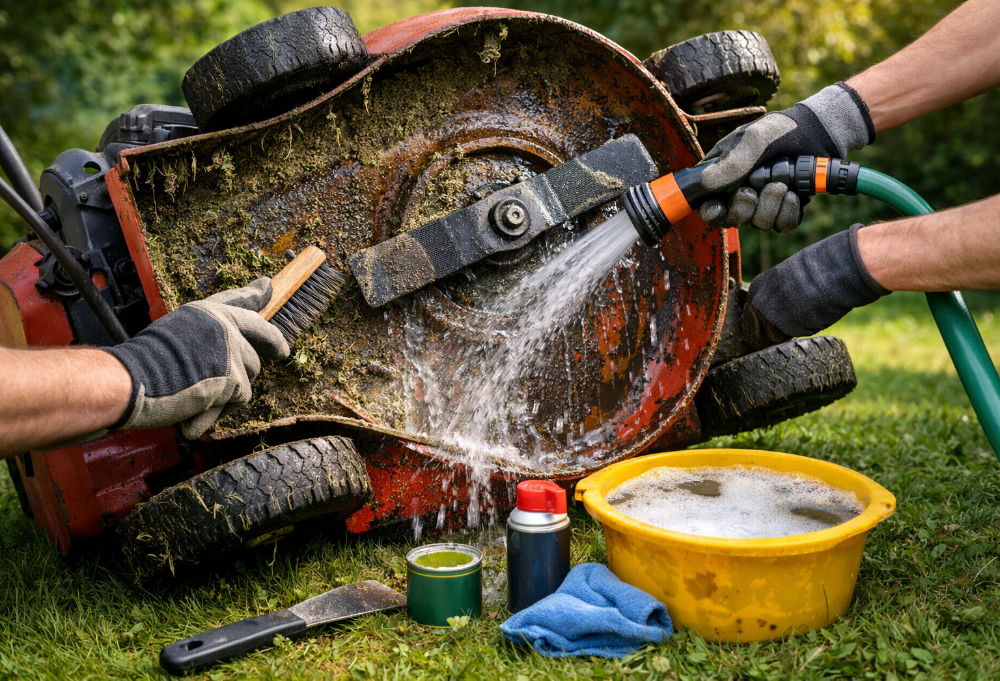
You will need a stiff-bristled brush or a dedicated under-deck cleaning tool, a garden hose with a spray nozzle, a plastic scraper or putty knife, a bucket of warm soapy water, rubber gloves, and a dry cloth or shop towel. For rust prevention after cleaning, you will also want a can of rust-inhibiting spray or a silicone-based deck spray, both of which are widely available at hardware and farm supply stores.
An under-deck cleaning tool is especially useful if you have a riding mower or a zero-turn with a wide deck. These tools connect directly to your garden hose and shoot pressurized water upward through a built-in port on the deck, flushing out clippings without requiring you to tilt or tip the machine. Many modern mowers come with this port already installed, and if yours does not, aftermarket adapters are easy to find and inexpensive.
Always disconnect the spark plug wire before getting anywhere near the blade. This single step prevents the engine from accidentally starting while your hands are underneath the deck. Safety should always come first, no matter how routine the task feels.
Step-by-Step Process for Cleaning Lawn Mower Deck Surfaces
Once you have your tools ready and the spark plug disconnected, you are ready to start the actual cleaning process. If you are working with a walk-behind mower, tilt it carefully onto its side, making sure the carburetor side faces up to avoid fuel or oil from leaking into the air filter. For riding mowers, use the deck wash port if available, or raise the deck to its highest position and work from the side.
Begin by using your plastic scraper to loosen and remove the bulk of the dried clippings. Work in sections, scraping in the direction of the metal ridges to avoid gouging the surface. Do not use metal scrapers on painted decks, as they can scratch through the protective coating and expose bare metal to moisture.
Once the heavy buildup is removed, spray the entire underside with your garden hose to wash away loosened debris. Follow up with your stiff brush dipped in warm soapy water, scrubbing the entire surface thoroughly. Pay special attention to corners, baffles, and blade mounting areas, where clippings tend to pack the tightest.
Rinse completely with clean water and then dry the deck as thoroughly as possible using shop towels. Do not skip the drying step. Leaving water sitting on bare or scratched metal accelerates the exact corrosion you are trying to prevent.
Once dry, apply your rust-inhibiting spray or silicone deck coating evenly across the entire underside. This protective layer creates a barrier that sheds moisture and resists the acidic compounds in grass clippings. Some homeowners in high-humidity areas like Bells, TN prefer to reapply this coating at the start of every season for added protection.
How Often Should You Be Cleaning Your Mower Deck?
Frequency depends on how often you mow and the conditions of your lawn. As a general rule, a light cleaning after every two to three mowing sessions keeps buildup from hardening and becoming difficult to remove. A thorough deep clean, including scraping, scrubbing, and reapplying protective coating, should be done at least twice per season: once in the spring before heavy mowing begins and once in the fall before the mower goes into storage.
If you mow wet grass frequently, you should clean more often. Wet clippings stick far more aggressively than dry ones and begin decomposing faster, accelerating the rusting process. Homeowners who use mulching blades should also be more diligent, since mulching keeps clippings circulating under the deck longer before they discharge, which means more material accumulates on the deck surface.
Lawn mower maintenance tips from equipment manufacturers consistently emphasize seasonal inspections as part of a complete care routine. Checking the deck for rust spots, cracks, or areas where the protective coating has worn through takes only a few minutes but can prevent much larger repair costs down the road. If you catch surface rust early, a quick sand with fine-grit sandpaper followed by a coat of rust-inhibiting primer can stop the spread before it becomes structural damage.
Common Mistakes That Speed Up Rust and Corrosion
Even well-intentioned homeowners make a few key mistakes that undo their cleaning efforts. The first is storing a dirty mower. If you finish mowing and park the machine without cleaning the deck, you are giving clippings time to bond to the metal and begin the corrosion cycle overnight. A quick rinse after each use takes less than five minutes and makes a significant difference.
The second common mistake is using a pressure washer set too high. While pressure washing is effective for removing stubborn buildup, using excessive pressure can strip away paint and protective coatings, leaving bare metal exposed. Keep the pressure moderate and maintain a safe distance from the surface.
The third mistake is skipping the drying and coating steps after washing. Water left in seams and corners sits against the metal and does exactly what you were trying to prevent. Always dry thoroughly and seal with a protective product before putting the mower back into service.
Conclusion
A clean mower deck is one of the simplest and most effective ways to protect your equipment investment. By using the right under-deck cleaning tool, following a consistent routine, and applying protective coatings after each cleaning, you prevent deck rust before it starts. Whether you are a weekend warrior in Bells, TN or a lawn care professional, keeping your deck clean means better cuts, a longer machine lifespan, and fewer costly repairs over time.